
Verified Local Taste: A firsthand review by a native Korean
The Real Local Secret
in Gwanghwamun
When travelers visit Gwanghwamun,
They often flock to famous spots like
Mijin or Gwanghwamun Lee-cheung-jip.
But if you ask a local where their true “soul food” is,
they’ll likely point you to a hidden alley.
Today, I’m sharing my review of Gwanghwamun Gukbap,
the brainchild of the renowned Chef Park Chan-il.
Chef Park Chan-il,
Gwanghwamun Gukbap Owner Chef
A graduate of the prestigious ICIF in Italy,
Chef Park is often called a “Chef’s Chef.”
He manages several successful Italian
and traditional Korean restaurants
and is a respected food columnist.
His gourmet travel packages to places
like Hong Kong are known to sell out instantly
a testament to his deep expertise and refined palate.
Getting to Gwanghwamun Gukbap
The restaurant is tucked away
in an alley that feels like a time capsule
of the 1990s, offering a sharp contrast
to the high-rise buildings of Seoul.
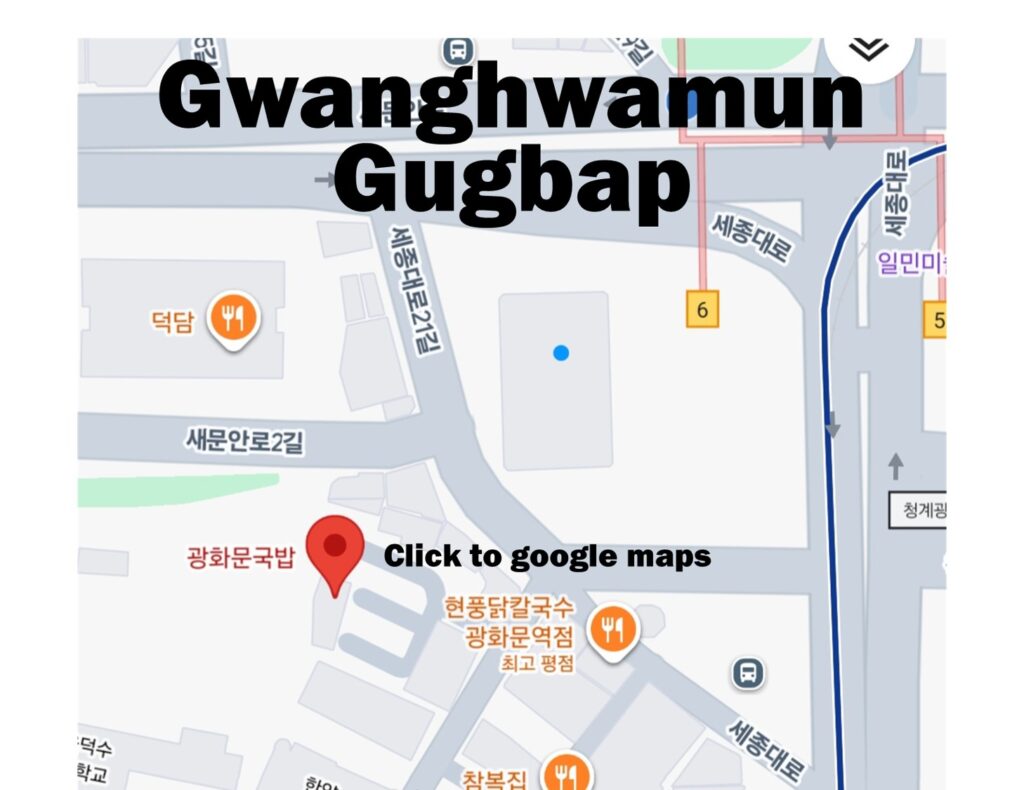
- Location: 53 Sejong-daero 21-gil, Jung-gu,
Seoul (5-min walk from Gwanghwamun Stn, Exit 6) - Nearby Hotels: Four Seasons Gwanghwamun,
Lotte Hotel Seoul, Shilla Stay Gwanghwamun. - Convenience: On-site parking is available
Booking & Waiting Tips
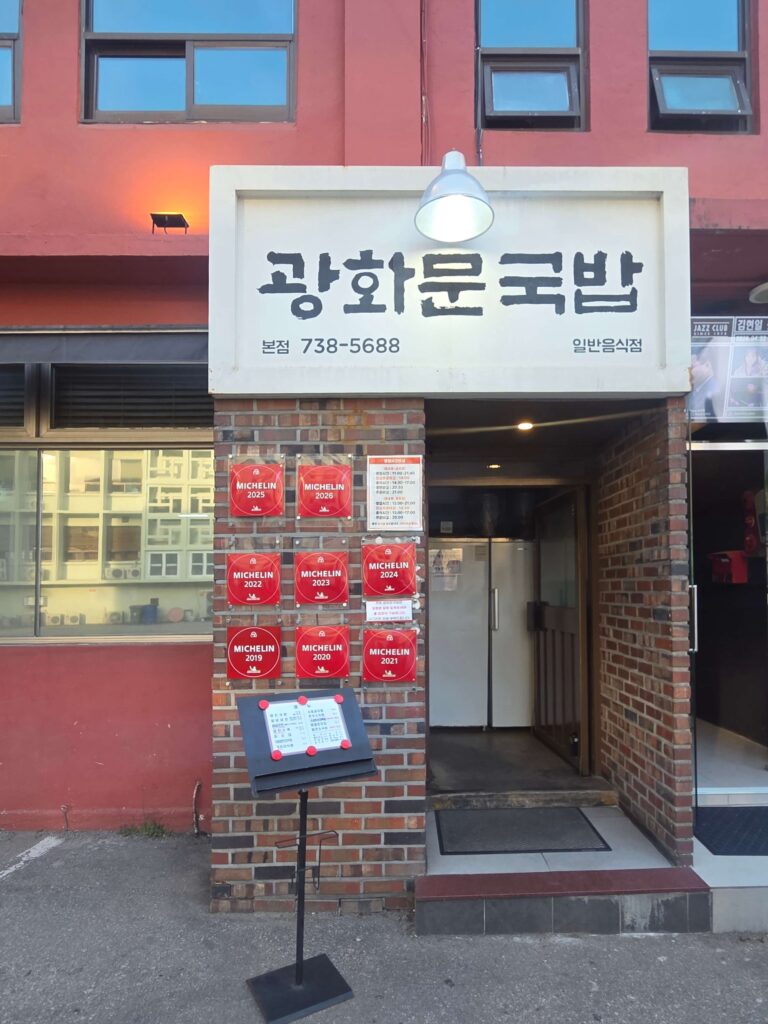
The entrance is adorned with
Michelin Bib Gourmande stickers,
proving its consistent quality over the years.
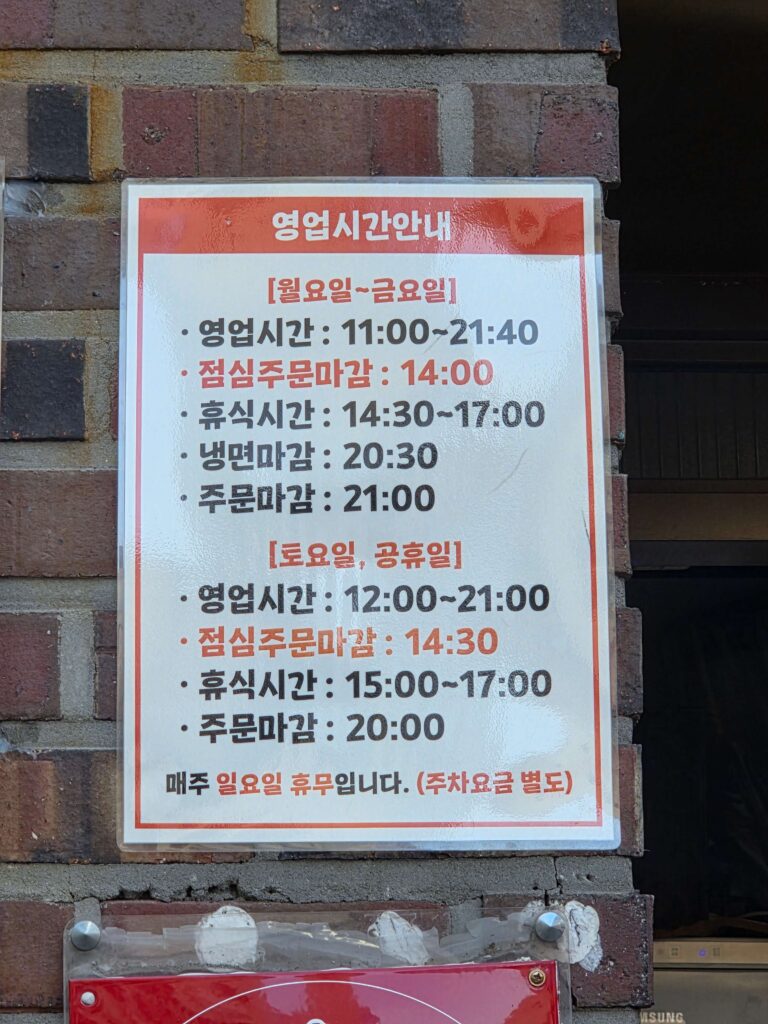
- No Apps:
They don’t use CatchTable or Tableing.
It’s strictly phone reservations or walk-in. - The “Full Party” Rule:
You cannot be seated until
your entire group has arrived. - Timing:
Lunch peak starts early at 11:20 AM.
For a more relaxed meal,
aim for after 1:00 PM.
For dinner, arriving around 6:30 PM
on weekdays usually gets you a seat
without a long wait.
Gwanghwamun Gukbap Menu
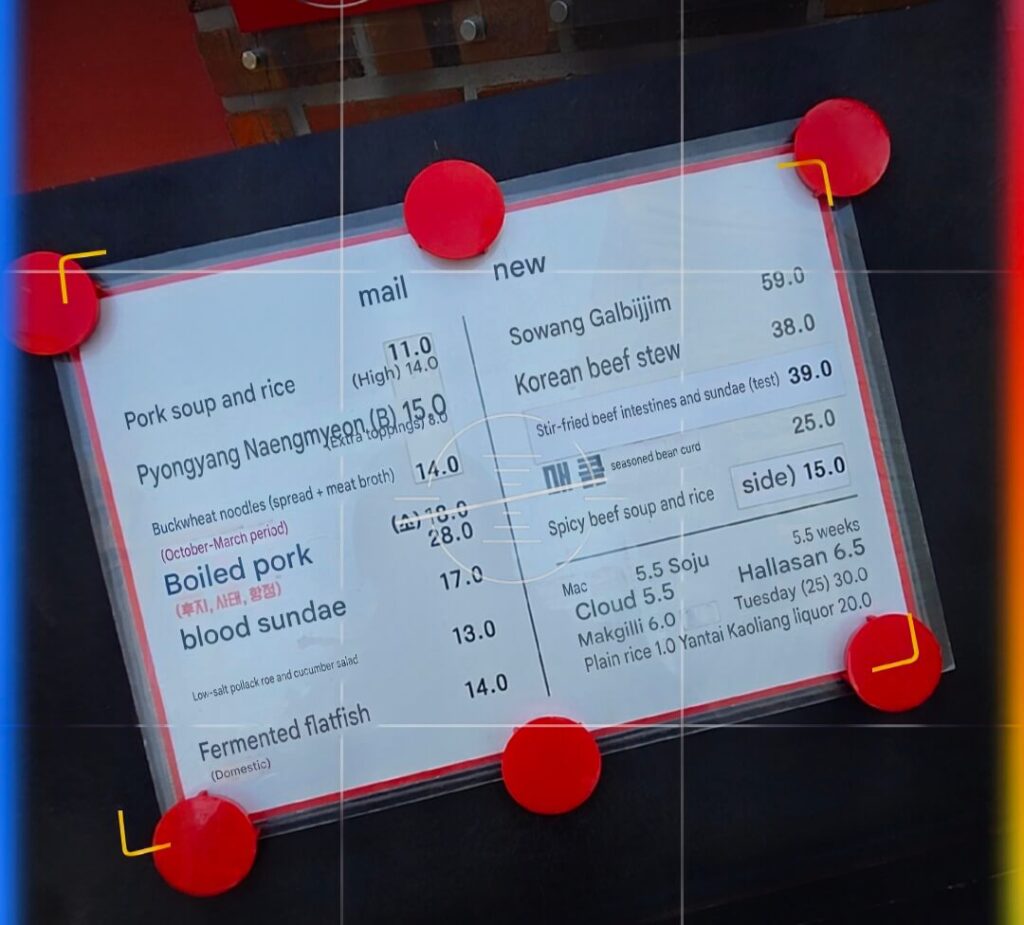
The menu at the entrance of Gwanghwamun Gukbap.
In addition to meal dishes,
they also serve side dishes along with
makgeolli (Korean rice wine) and soju.
What makes the menu stand out is that
It brings together dishes rooted in
different regions of Korea —
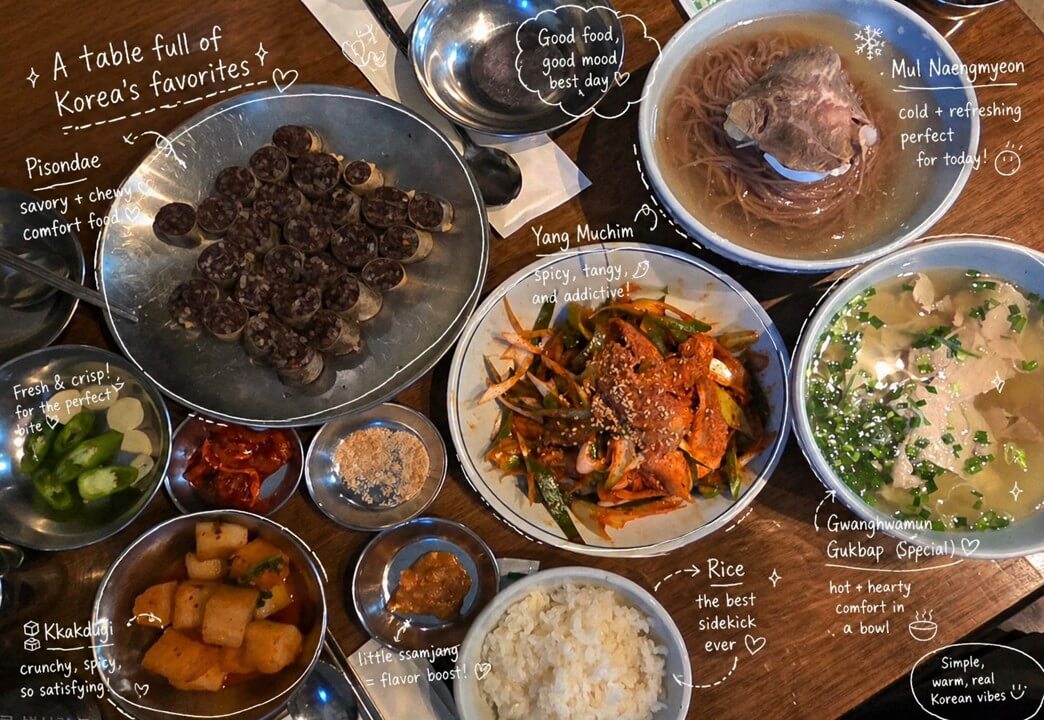
such as Busan-style dwaeji gukbap (pork and rice soup),
Pyongyang-style naengmyeon (cold buckwheat noodles),
and Jeonju-style pi-sundae (blood sausage)
All available right in the heart of Seoul at Gwanghwamun.
It’s also worth noting that although
it doesn’t appear on the printed menu,
gochujang jjigae (a spicy, robust chili paste stew)
is available in the evenings.
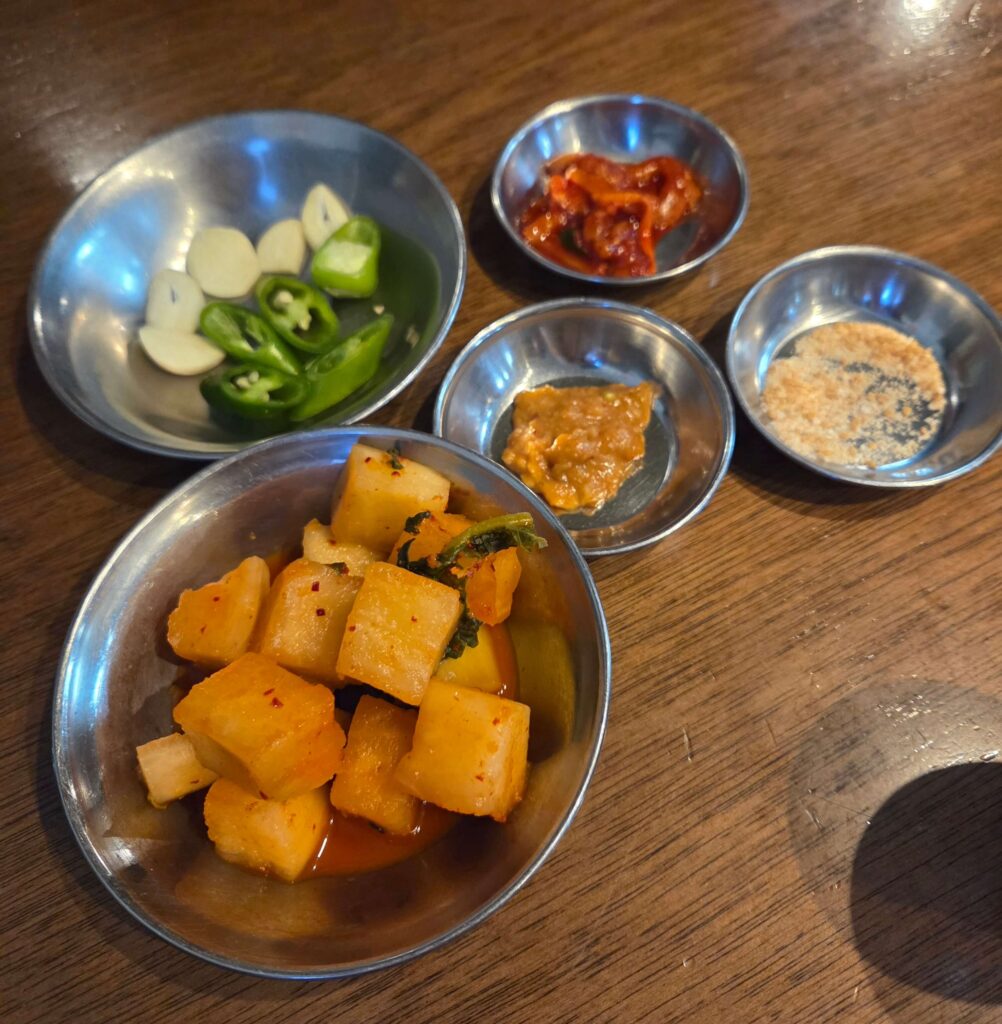
As soon as you sit down,
the staff sets the table with their house-made Kkakdugi (radish kimchi).
It’s perfectly crunchy, not too spicy,
and pairs beautifully with every dish.
Best of all, refills are always welcome.
1. Pork Soup (Dwaeji Gukbap)
— 11,000 KRW
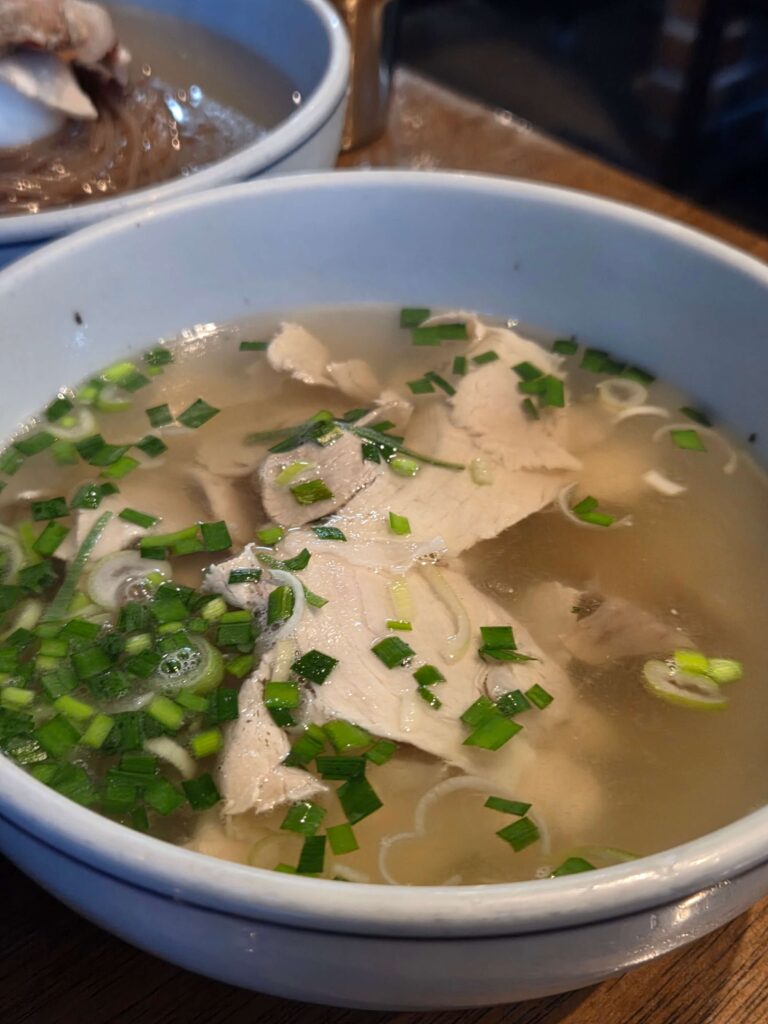
Most pork soups are milky and rich,
but Chef Park’s version is revolutionary.
By using only lean leg meat
—no bones or innards—
he creates a transparent,
golden broth that is incredibly light and clean.
✔️Local Tip:
Order the “Special” size (14,000 KRW)
if you want extra servings of
that tender, thinly sliced pork.
2. Pyongyang Naengmyeon
— 15,000 KRW
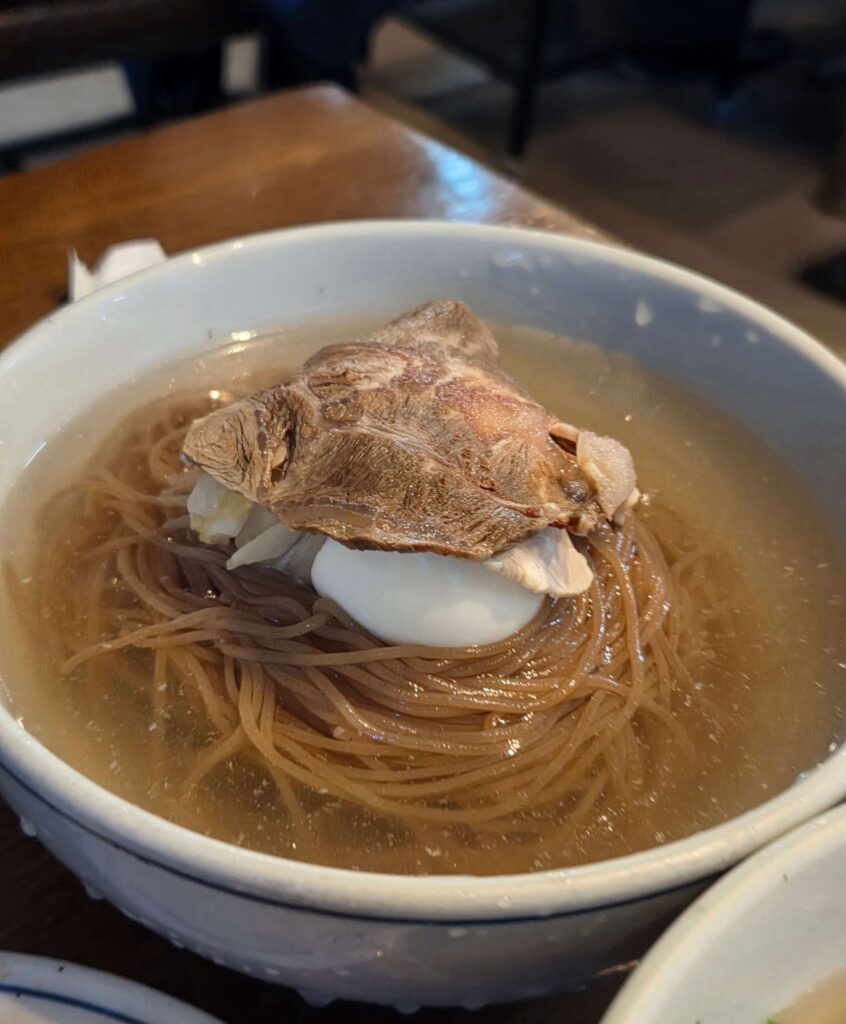
As a lover of Pyongyang-style cold noodles,
I’d give their version a 70/100.
It’s a great side if you’re already there
for the soup, but dedicated noodle shops
might offer a bit more depth.
Still, it’s a refreshing choice on a hot day.
3. Yang-muchim (Spicy Beef Tripe Salad)
— 25,000 KRW
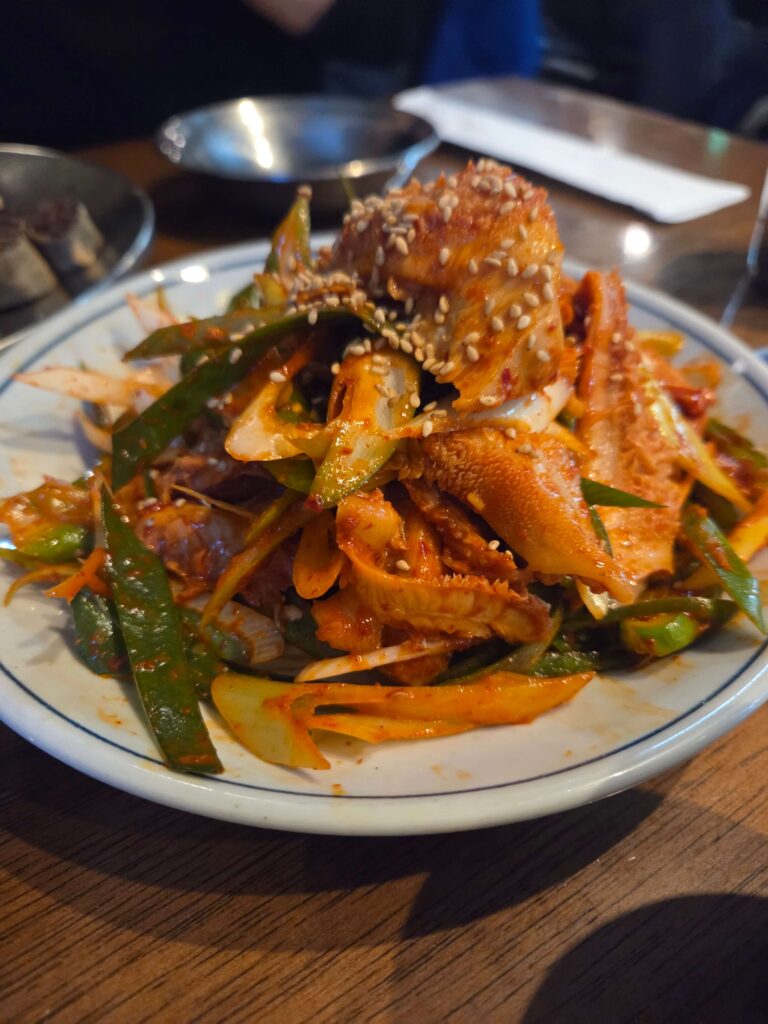
Yang-muchim is a specialty dish
made by gently steaming beef tripe
(the first stomach) and tossing it
with various vegetables in a sweet and tangy dressing.
If you have ever enjoyed
the famous spicy sea snail salad
(Golbaengi-muchim) in the Euljiro alleys,
you will definitely love the flavors of this dish.
It’s a fantastic delicacy that adds
a bright, zesty note to the meal.
Refined Pi-sundae (Blood Sausage)
— 17,000 KRW
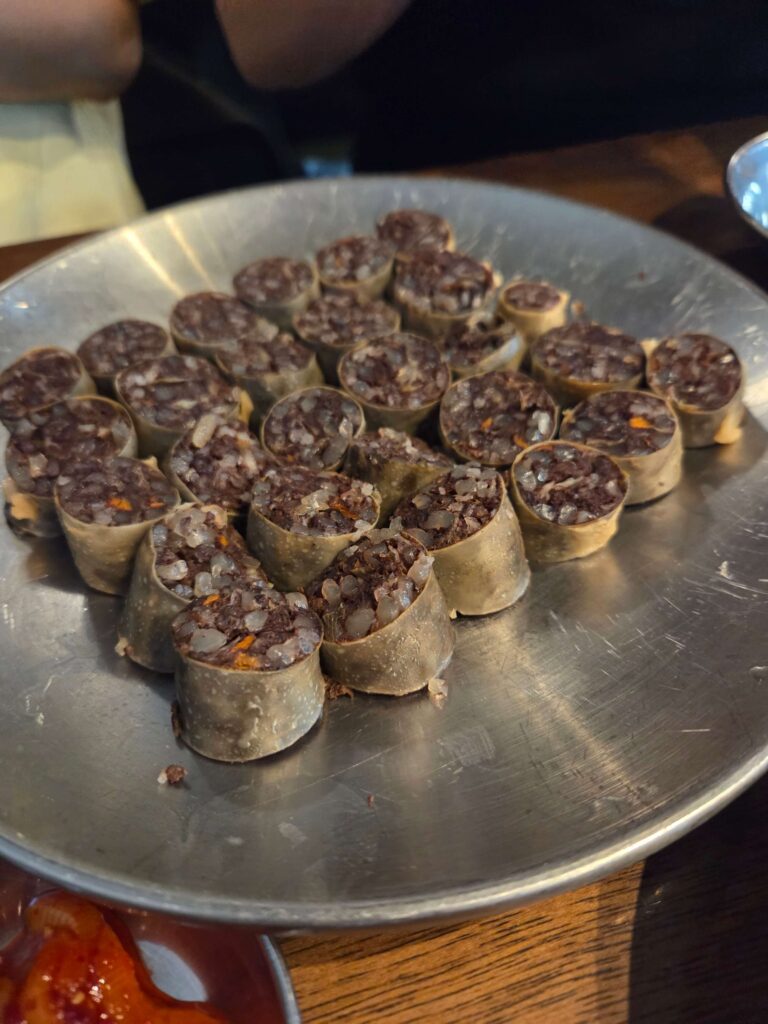
Unlike the more common sundae
filled mostly with glass noodles,
Pi-sundae is packed with pork blood,
giving it a much deeper umami flavor
and a rich, “heavy” texture.
The Pi-sundae I’ve had in the past
often felt a bit “raw” or rustic,
like something you’d find in a busy traditional market.
However, the version here
at Gwanghwamun Gukbap felt
remarkably refined and clean.
Just as it looks in the photos,
the flavor is very well-balanced and polished.
A Regional Dipping Tip:
In Seoul, people typically dip sundae in salt,
while in Busan, it is paired with Makjang
(a seasoned soybean paste).
When it comes to Pi-sundae,
Makjang is undoubtedly the superior pairing.
Place a slice of green chili and
a sliver of garlic on a piece of Pi-sundae,
top it with a dollop of Makjang,
and you have the ultimate accompaniment for your drink.
Experience the Beautiful
Korean Culture of ‘Banju’
In Korea, we have a wonderful
dining tradition called “Banju.”
It refers to the practice of enjoying
a small amount of alcohol
,usually a bottle of Soju
to perfectly complement a hearty meal.
On my previous visits to Gwanghwamun Gukbap,
I usually opted for the Low-salt Myeongnan
(Pollack Roe) with Cucumber.
While that dish is undeniably delicious.
A Fantastic Evening Spread
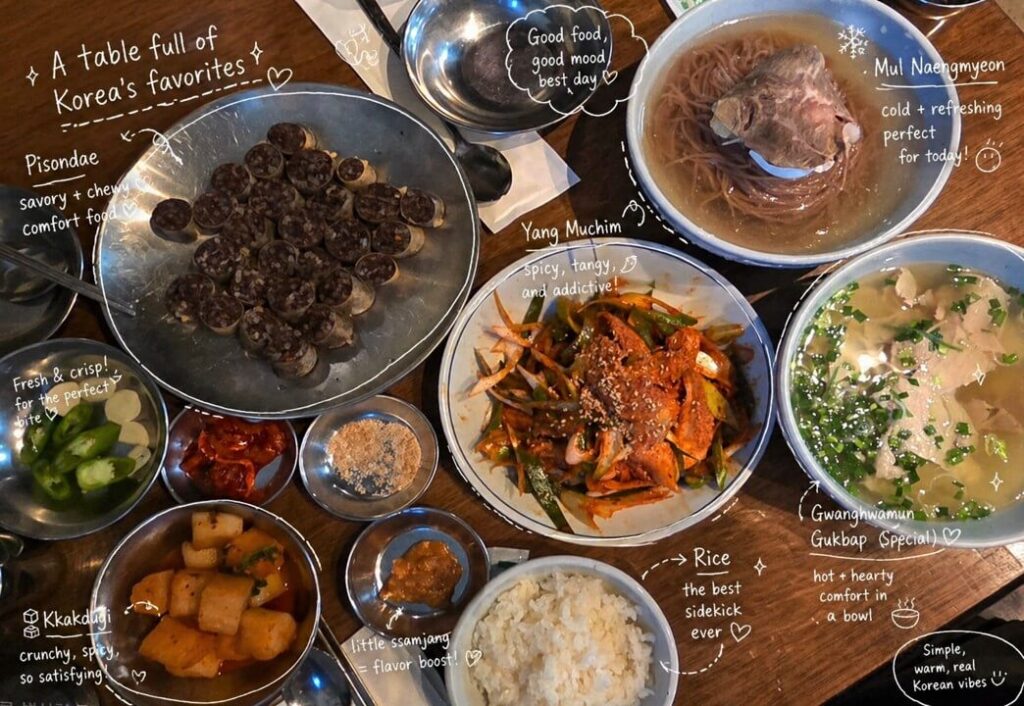
This was the fantastic,
generously spread dinner table
I enjoyed at Gwanghwamun Gukbap
a perfect balance of clean soup,
rich blood sausages, and tangy sides.
Final Thoughts
Whether you need a “hangover cure”
lunch or a sophisticated evening with drinks,
Gwanghwamun Gukbap delivers.
It balances the nostalgia of an old alley
with a modern, clean dining experience.
Local Tips
- You can upgrade your dwaeji gukbap
to a large size, and add extra noodles (sari)
to the Pyongyang naengmyeon. - For two people:
go for either the large-size gukbap,
or the Pyongyang naengmyeon
with extra noodles plus one dish. - For a group of three to four:
order the large-size dwaeji gukbap
and naengmyeon with extra noodles,
then add a couple of side dishes to share
Quick Summary:
- Must-try: Clear Pork Soup
- Vibe: Solo-friendly and great for groups.
- Best for: Travelers wanting authentic,
non-greasy Korean soul food.
👍If you like a warm soup ind Seoul,
For more local noodle recommendations,
check out my guide on “Local 3 noodle spots”
https://koreaandbeyond.com/best-noodles-in-seoul/