
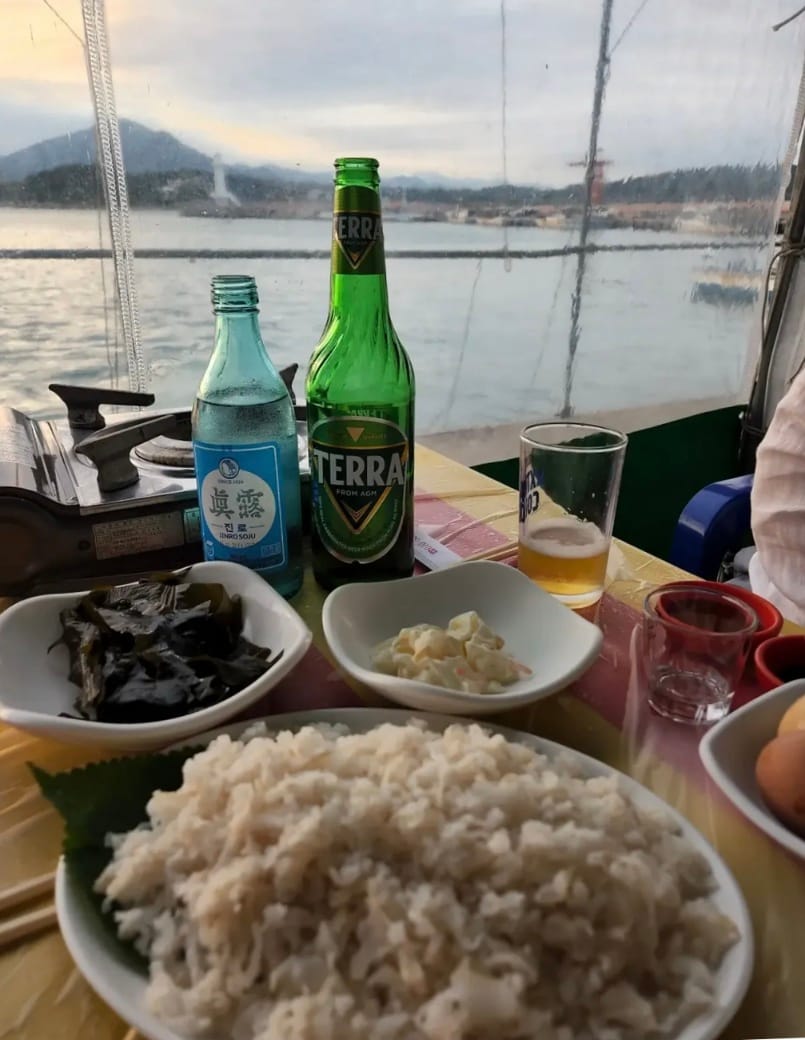
There’s a saying among people who really know Busan:
first-timers eat seafood in Haeundae, those who’ve been twice go to Gwangalli — but Busan locals go somewhere else entirely.
That somewhere else is Hakri Breakwater (학리방파제) in Gijang. A row of ten outdoor seafood stalls facing a fishing village harbor, a red lighthouse in the distance, and no English menu in sight. This is the kind of place that spreads by word of mouth, not by travel guides.
What Is Hakri Breakwater Busan?
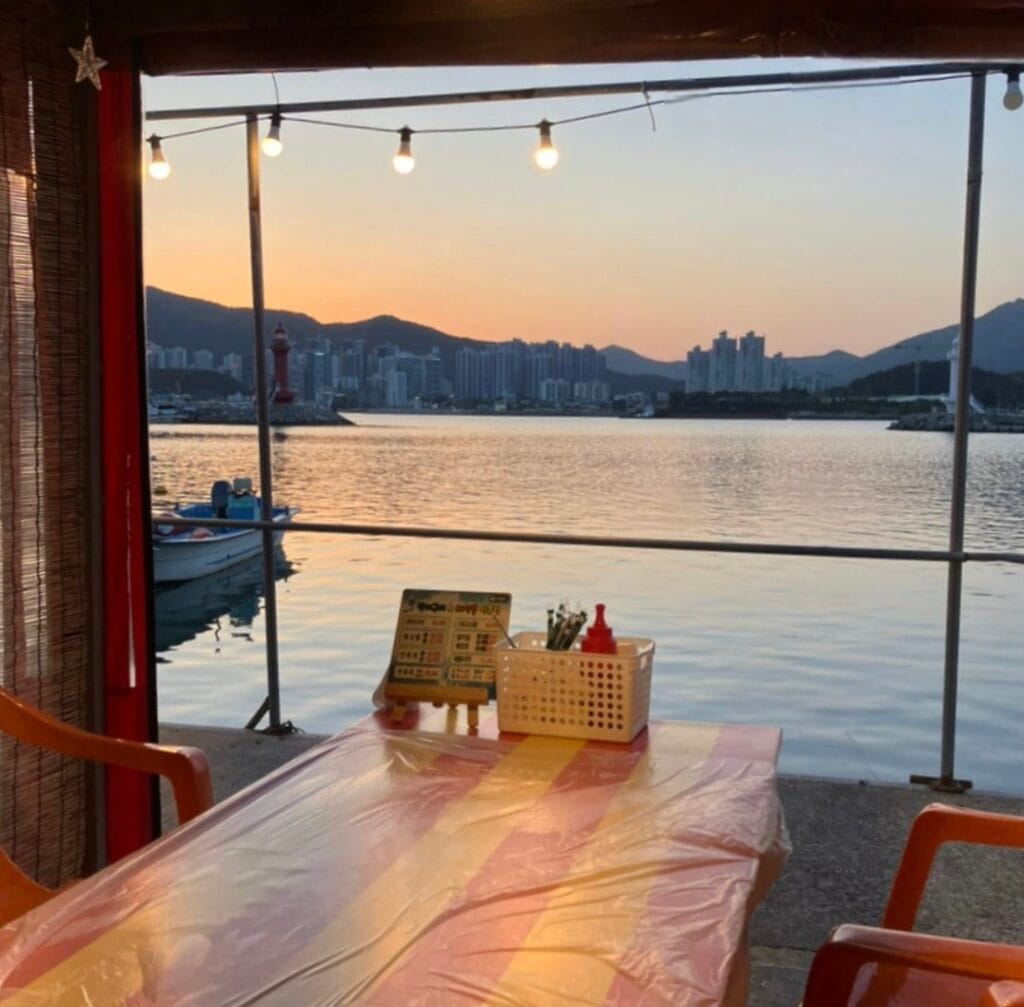
Hakri Breakwater sits at the far end of Gijang,
one of Busan’s northernmost coastal districts. At the entrance to a small fishing village, ten seafood restaurants are clustered side by side — and what makes them special is that every single one operates two or three outdoor terrace tables facing the breakwater and the sea.
That combination — the rough, unhurried atmosphere of a working fishing village, ocean air, a red lighthouse, and fresh seafood in your hand — is something you genuinely can’t find anywhere else in Busan. That’s why locals started talking about it, and why it’s slowly becoming one of the city’s best-kept open secrets.
All ten spots (referred to as 1호 through 10호, meaning stall #1 through #10) have a similar feel and overlapping menus. They all serve grilled eel (장어구이), mixed seafood platters, and anago sashimi (아나고회). Side menus vary slightly between stalls.
Menu at Hakri Breakwater Busan
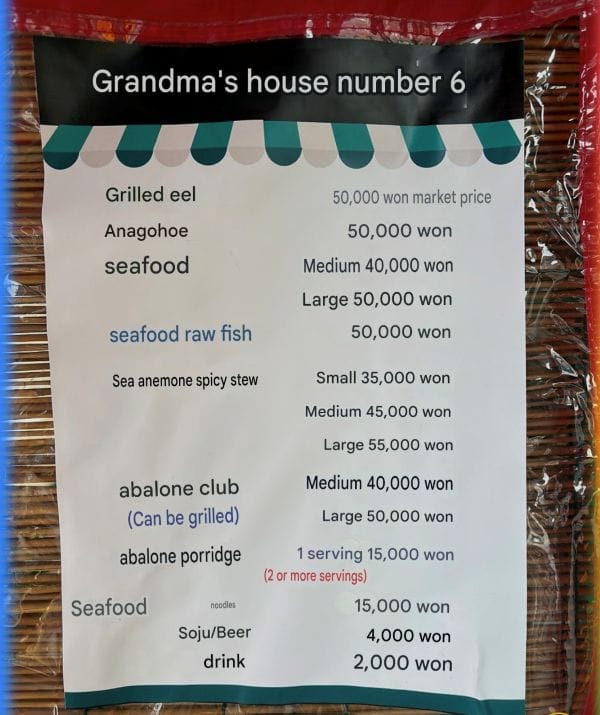
The stalls I keep coming back to are #10, #8, and #6 — they have the best views of the three, which is reason enough.
But honestly, I come to Hakri Breakwater specifically for the anago-hoe and jangeo-gui, and both have never let me down across multiple visits.
One personal note: if your priority is a mixed seafood platter (해산물 모듬), I’d actually point you toward Yeonhwa-ri Haenyeo Village (연화리 해녀촌) over Hakri Breakwater.
That’s just my take — your mileage may vary.
Either way, let me walk you through what’s on the menu here.
Anago-hoe (아나고회) /50,000won
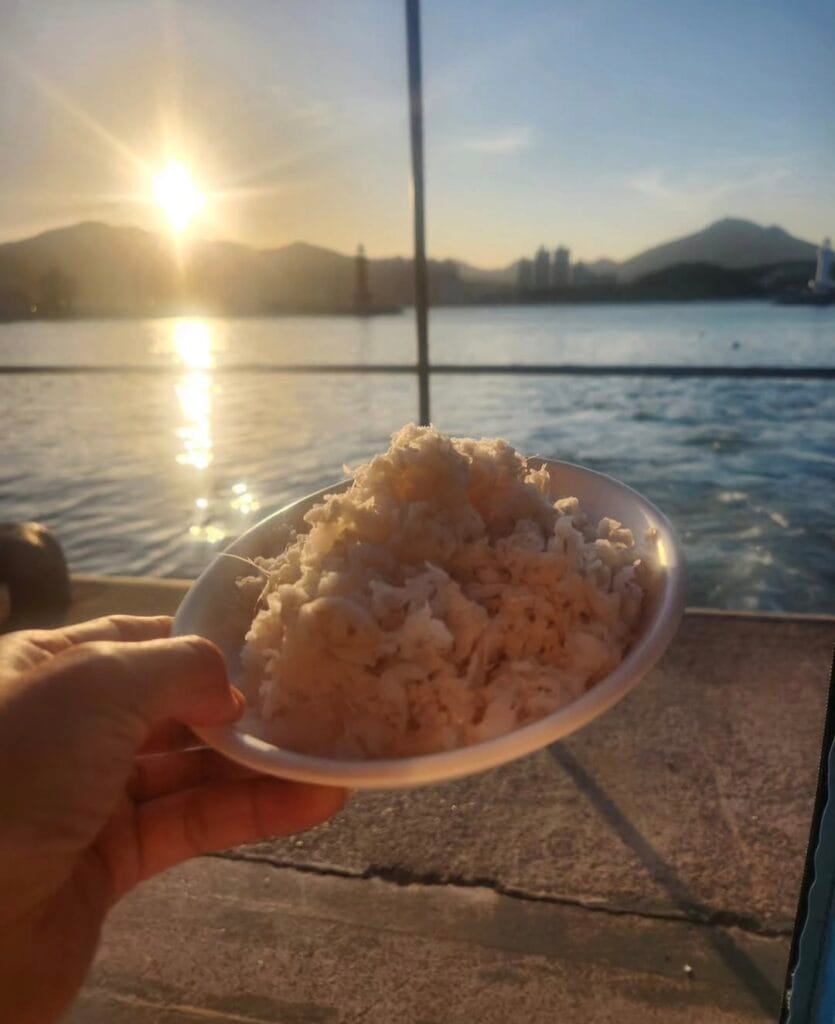
This is the dish to order here. Don’t skip it.
In Korea, raw fish is generally thought of as a winter food,
but anago — conger eel — is at its best from June through October, which makes summer and early autumn the ideal time to visit. In Seoul, flatfish (광어), rockfish (우럭), and amberjack (방어) dominate the sashimi scene. Anago is rarely found there, partly because the bones are notoriously tricky to prepare. Here in Hakri, it’s the house specialty — and it’s priced surprisingly low for what you get.
The eel is sliced thin, almost like squid sashimi, so the bones completely disappear. You don’t eat it piece by piece; you heap a spoonful onto a ssam leaf and wrap it all together.
It goes well with sesame oil or with soy sauce and wasabi. Either way, it’s incredibly good.
Jangeo-gui (장어구이) /50,000won
— Grilled Eel
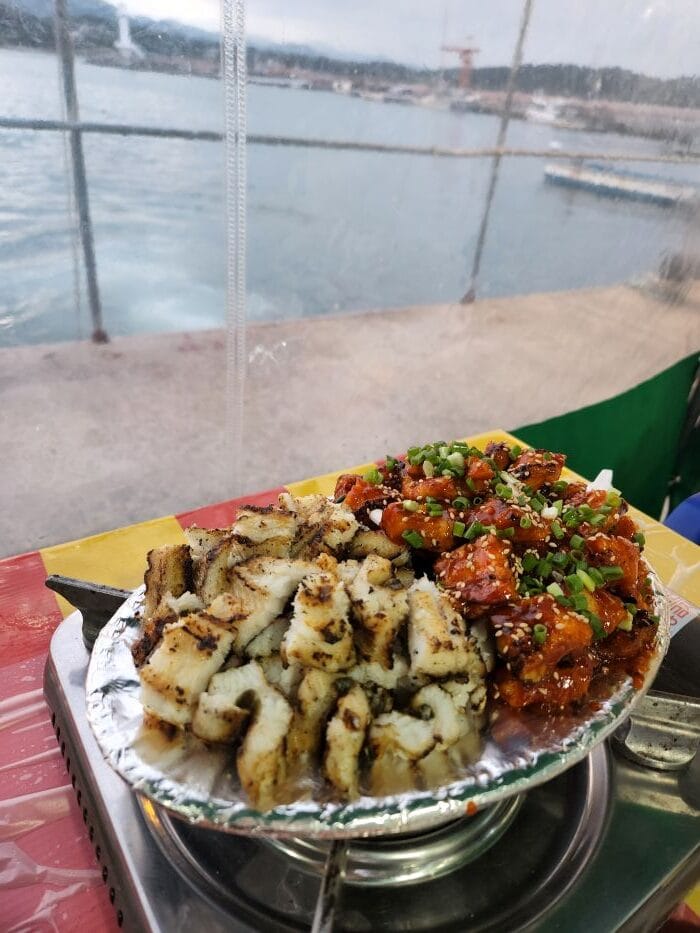
Order it half plain-salt (소금) and half yangnyeom
(양념, spicy-sweet sauce). They come pre-grilled to your table, so no fussing with a tabletop grill.
In Busan, the most talked-about eel dish is usually gom-jangeo-gui (꼼장어구이, grilled hagfish) at Jagalchi Market — cooked over charcoal right at the table, which some people find a bit confronting. The eel here is different.
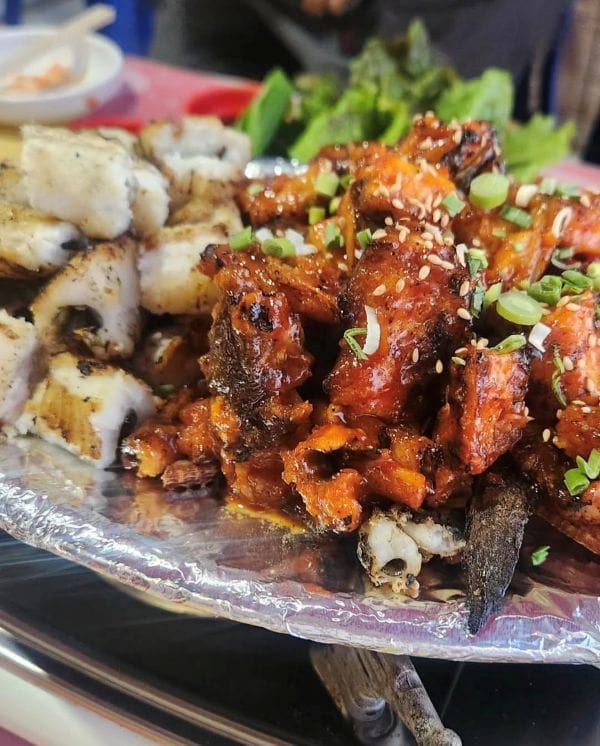
It’s bung-jangeo (붕장어, conger eel), not hagfish, and the portion is noticeably more generous. The flesh is meaty and smoky without any fishiness. The salt-seasoned half is clean and simple; the yangnyeom half is a sweet-spicy contrast. Get both.
Side dishes
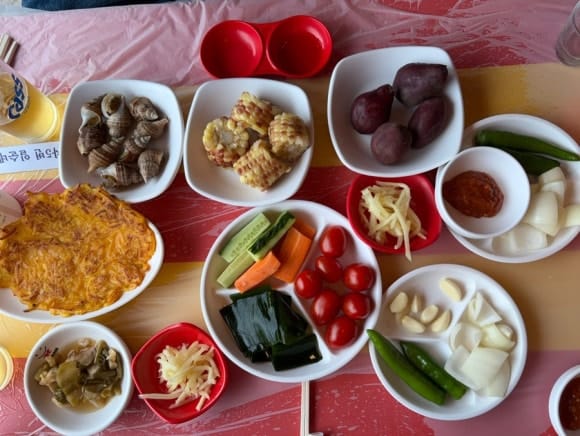
Once you’re seated, the complimentary banchan arrives — and it’s more generous than you’d expect.
Depending on the season, you might get kimchijeon or pajeon (green onion pancake), plus steamed sweet potatoes and corn. There’s a warmth to it that feels distinctly like old Korean hospitality. And yes, they all go well with soju.
Seasonal additions
In summer: haemul mulhoe (해산물 물회),
a chilled raw seafood soup — refreshing and punchy.
In winter: jeonbok-juk (전복죽), warm abalone porridge.
Getting There
Hakri Breakwater is about 40 minutes by taxi from Haeundae. If you’re coming from Gijang (Busan Lotte World Adventure, Lotte Premium Outlets, or Busan Ananti Hotel) it’s roughly 20 minutes.
There are buses that pass nearby, but the stop isn’t easy to find if you don’t know the area. Taxi is the practical choice for a first visit.
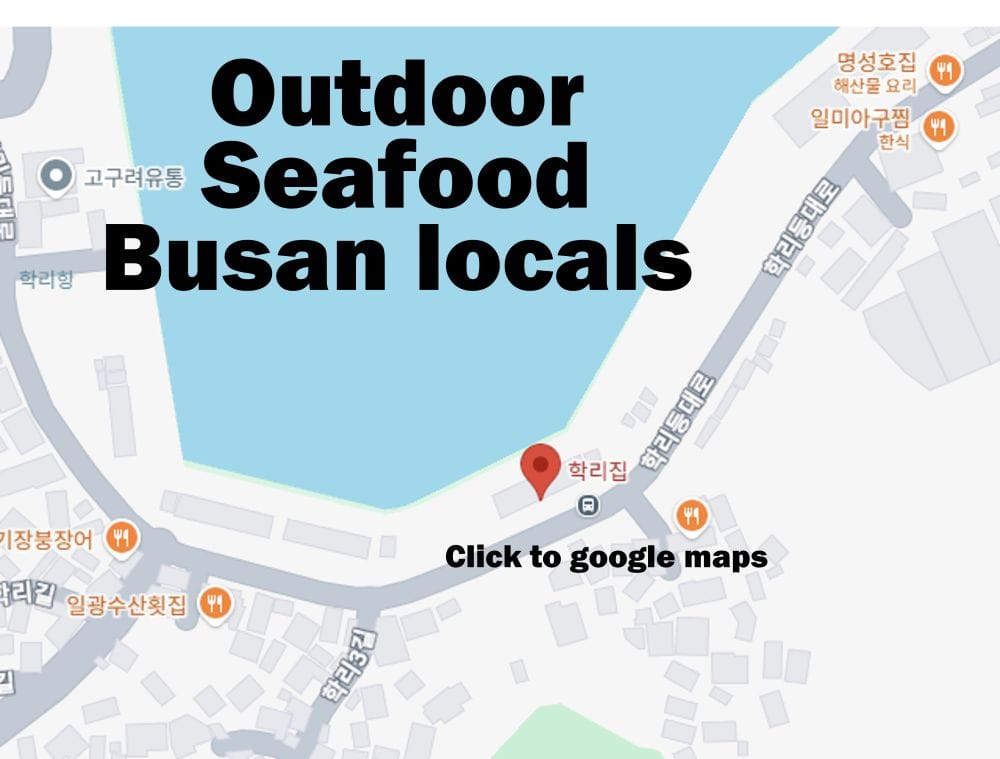
- Address: 101 Hakri Deungdae-ro, Ilgwang-eup,
Gijang-gun, Busan - How to get there: KakaoTaxi or Uber
- Hours: 10:30 – 21:30, closed Tuesdays
- Foreigner notes: Shared public restroom on site (clean). No English menu at any of the stalls.
Each stall has indoor seating as well as two or three outdoor tables facing the breakwater. Since the menus and quality are comparable across all ten, just pick the one with an outdoor seat available — that’s the whole point of being here.
Tips for Your Visit
✔️Arrive before 6 PM.
After 7 PM, outdoor seats are almost always taken and you’ll end up inside. But honestly, the better reason to arrive early is the sunset: around 5 PM, sit down, order your food, and watch the sun drop toward the water alongside the red lighthouse. It’s one of Busan’s lesser-known sunset spots, and it earns that title.
✔️ Outdoor seating has a 2-hour limit.
In practice, this is rarely enforced strictly — but on packed evenings it can be. If you hit the time limit, the natural move is to finish your main dishes at one stall, then walk to a different numbered stall for mae-un-tang (매운탕, spicy fish stew), jeonbok-juk (전복죽), or something lighter as a second round. There’s nothing worth going back to town for anyway, so this setup works perfectly.
✔️No English menu. Point and gesture works fine, and the owners are used to it. The core menu is simple enough: anago-hoe, jangeo-gui, and seasonal seafood. If you say “아나고회 하나, 장어구이 하나 주세요” (ah-nah-go-hwe ha-na, jang-eo-gu-i ha-na ju-se-yo), you’ll be sorted.
Final Thoughts
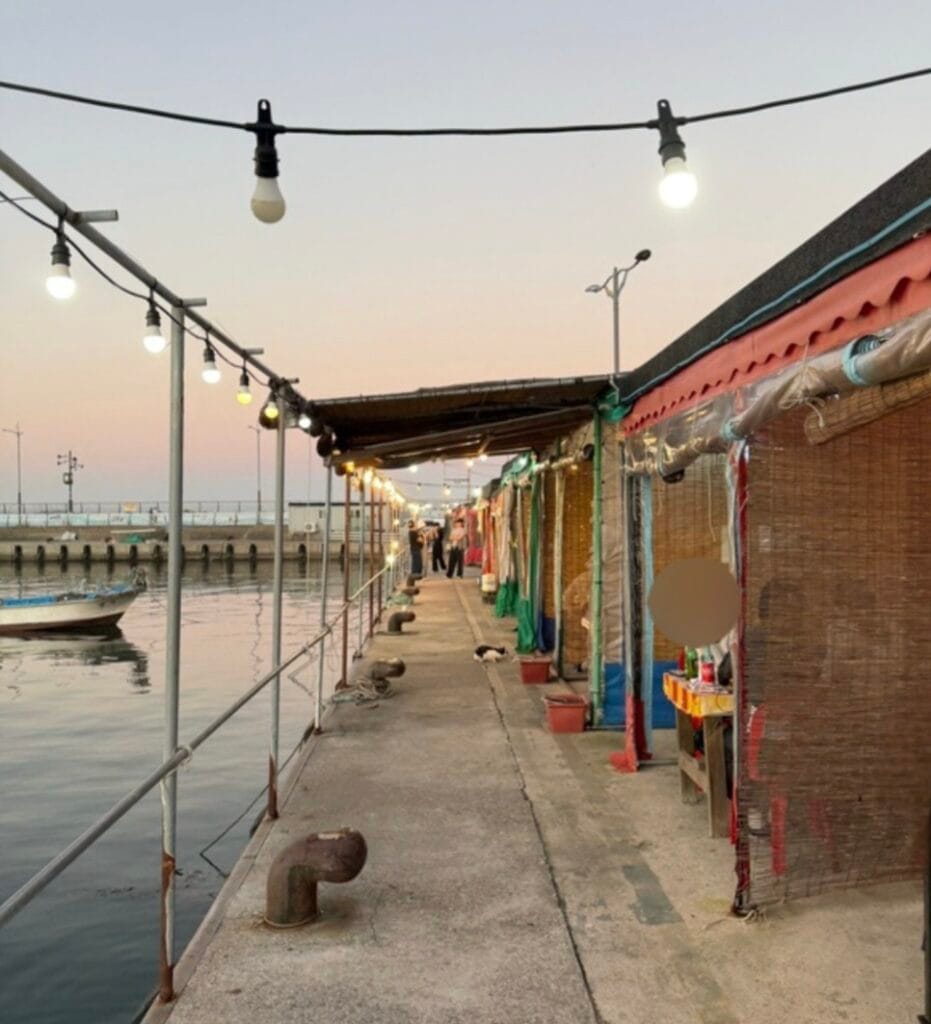
Every stretch of Busan coastline has its own mood.
Haeundae is electric and crowded. Gwangalli feels young and lit up at night. Hakri Breakwater is quieter than both — a small fishing harbor with working boats, a lighthouse, and ten stalls that have been doing the same thing for years. There’s a kind of melancholy to it, in the best sense. A glass of soju here tastes different than it does anywhere else in the city.
If you’ve been to Busan before and feel like you’ve already seen the usual spots, come here. Outdoor seafood by the ocean, a sunset you didn’t plan for, and eel sashimi you can’t get in Seoul. That’s what Hakri Breakwater is.
| After a night at Hakri Breakwater, if you’re craving something warm to finish the evening, check out my full review of a 24-hour dwaeji gukbap spot in Busan perfect for a late-night bowl. 👉<Gyeongju Bakga Gukbap (경주박가국밥)> |
| If the atmosphere here speaks to you, you’ll also want to read about Yeongdo Haenyeo Village (영도 해녀촌) — where haenyeo divers serve the seafood they caught that morning, alongside ramen and gimbap, right by the water. -COMINGSOON- |